As you can see, my last post skipped a unit. While looking for a subject to write about for Unit 3, I discovered the subject I was researching was more correlated with Unit 4 than anything else. So I decided to do a switcheroo and will be posting an article and discussion for Unit 3 when I find something worth writing about!
At the end of this series of blog posts, I will post a page with all of my sources formatted in accordance to the MLA format. In the meantime, my main articles and the additional sources used for a particular post can be found at the end of each post. There is also a long list of all the links at the sidebar under Article Sources.
I totally understand that no one is reading this because they want to, but thanks anyways dudes!
It's About Time Alberta Cleans Up Their Act (Literally)
A bit of background information/vocabulary to start us off so that we are all on the same page here.
Tailings ponds are “engineered dam and dyke system[s]... used as settling basin/storage container[s] for the mixture of water, sand, clay and residual oil that is left over after oil sands processing. Once in the pond, the sand quickly sinks to the bottom, and the water from the top three metres is recycled” (Canadian Association of Petroleum Producers). The tailings left in the pond present large problems to drilling industries. While the heavier sand descends to the bottom and the water rises to the top, the middle layer, often referred to as mature fine tailing, is “made up of fine clay particles [which] remain suspended in water for long periods of time, making it necessary to expand tailings facilities or find new technology to speed up this process” (Shell Canada). Tailings ponds inhibit further drilling for long periods of time while the mature fine tailings gradually descend to the bottom of the pond. Furthermore, the heavier sand at the bottom of these ponds remains a soupy liquid, making it difficult to manage.
In Edmonton, Alberta, water pollution caused by oil sands is at an all time high. Companies drilling for oil must follow regulations put in place to ensure that tailings ponds get cleaned up and do not pollute the province’s waters. And yet heading into 2015, the Alberta government has been forced to make necessary changes to these guidelines due to the extreme non-committance of oil companies in regards to cleanup efforts. Global News states that “the Alberta government has released a new plan for managing oil sands’ tailings ponds that it says will encourage companies to generate less of the toxic waste water and clean it up sooner”. The Environment Minister, Kyle Fawcett, has said that now, there will be parameters set in place concerning the size of tailings ponds and possible fines if these boundaries are pushed. The government is hoping to push companies in their research for new oil drilling waste management technologies. In 2009, similar efforts were made to cut back on the amount of pollution due to drilling and the number of tailings ponds, yet the regulations put in place were not met. This time, the government is determined to make it work, stating that they “have to make sure that it’s more expensive to break the rules than it is to comply with the rules” (Global News).
Fletcher Kent is Global Edmonton's longest-serving reporter.
Shell Canada is an example of a company taking initiative in their cleanup efforts by announcing the start-up of their commercial-scale Atmospheric Fines Drying system. They note that “[their] challenge is to develop and apply technologies that will accelerate the pace at which tailings can be reclaimed” (Shell Canada).
The Globe and Mail further explains that, "The (Shell) plant adds a chemical to the tailings, called a flocculant, that helps to thicken them into a sludge”. Flocculants are chemicals that promote flocculation by causing colloids and other suspended particles in liquids to aggregate, forming a floc. Flocculants are used in water treatment processes to improve the sedimentation or filterability of small particles. Some examples of chemicals used as flocculants: alum, aluminium chlorohydrate, aluminium sulfate, calcium oxide, calcium hydroxide, iron(III), chloride iron(II), sulfate polyacrylamide, polyDADMAC, sodium aluminate, and sodium silicate. The Globe and Mail continues to explain “[the Shell plant] then sprays the sludge onto the sides of a 30-hectare sloping pit, where water drips from the tailings and leaves behind a solid substance that looks a bit like wet sand. Shell said the technological breakthroughs lie both in the flocculant it is using, and the process of placing down the sludge in such a way that water efficiently drains away."
Wapisiw Lookout before reclamation
(Wapisiw Lookout was a storage area for oil sands tailings between 1967 and 1997)
Wapisiw Lookout after reclamation
(Transformed oil sands tailings pond into a surface solid enough to be actively re-vegetated and reclaimed. Once complete, Wapisiw Lookout (formerly Pond 1) will be a 220-hectare area of mixed wood forest and a small wetland, supporting a variety of plants and wildlife.)
Of course, this new system could help reverse damages to the province’s waters. If it works, the new approach to tailings could mute some of the environmental criticism directed at the industry, whose waters are laced with heavy metals and other dangerous pollutants, and whose tailings ponds are an ugly reminder of the oil sands' environmental toll. Yet on the other hand, we see how Alberta is Canada’s main oil provider and produces most of the profit for our country in this sector.
Another issue to look at is the use of water from the Athabasca River. In terms of legal and ethical struggles, the use of this water is being debated between First Nations and drilling companies. Along with their new tailings pond guidelines, the Alberta government has also released rules on the amount of water that is allowed to be used by oil industries for the sand flats. Global News states that:
The average total allowable amount is to be cut nearly in half. No withdrawals will be allowed during low-flow periods, except for older mines. The government says the guidelines will preserve the river’s ecosystem and still allow for aboriginal water use.
While this may be the aim of the government, the new plan concerning the Athabasca River is still being challenged in court by area First Nations who wish to take full control of the waters.
Last but not least, there are issues concerning waterfowls who land within tailing ponds and drown as a result of oiling. If anything, this should push companies to try and clean up their messes.
Watch this video to hear about other efforts being put in place to keep waterfowl from landing in tailings ponds:
Who here believes it's about time Alberta cleans up their act? Isn't it about time that we repay the environment for its natural resources by keeping it clean? How can we keep one of our country's biggest sources of income afloat while also balancing the needs of the environment, its wildlife, and other humans such as the First Nations? Do you believe that Shell Canada's proposal is a longterm fix or will it only resolve certain environmental issues for a short while? Or will it even work at all?
Stay sassy readers and stay tuned for a post on Unit 3 soon (I'm going a bit backwards here),
In Howe Sound, British Columbia, the harsh pollution spilled into its waters by the pulp mining industry has caused it great damage. Once a prosperous environment where marine life thrived, “the seabed near the Britannia Beach mine [has since been] described as a moonscape by divers who went down looking for marine life after the mine closed in 1974. They couldn’t even find algae” (Globe and Mail). Due to excessive amounts of sulphate poured into their waters, Howe Sound’s ecosystem was left barren and its many fishing industries left broke. “It seemed like [the marine life] was gone forever several decades ago when the cumulative impact of pollution from pulp mills and acid drainage from an abandoned copper mine left the waters of Howe Sound largely lifeless” (Globe and Mail).
It wasn’t until recently in 2011 that Howe Sound saw the reintroduction of salmon into their waters, followed gradually by crab and prawn populations due to concentrated efforts to restore the marine life. Not only did the Howe Sound Pulp and Paper began a $1.3-billion renewal process to restore marine frequency in the waters, but the provincial government has also donated large sums of money to its rehabilitation.
The particular chemical processes used in paper and pulp mining happen to be particularly damaging if not done correctly. Numerous emissions can be emitted and can cause varying effects. Environment Canada’s Pulp and Paper resources make certain notes on the chemical process of pulp and paper mining:
In the chemical process, wood chips and sawdust are cooked by using an aqueous solution of chemical. This process results in the separation of cellulose fibre from the wood by dissolving the lignin that binds the fibres together. The remaining solution (chemical and lignin) is then recycled to recuperate the chemicals. This is achieved by burning the chemical and lignin mixture (black liquor) to produce energy (recovery boiler) with the remaining residue treated in a caustic plant.
In both processes, the pulp could be washed or bleached depending on its final use. In most mills, the gas produced by the chemical process and washing are collected and burned. The power and recovery boilers generate the steam to meet all the requirements of the mill. The age, technology and emission controls of the boiler will determine the amount of air emissions generated by the mill.
The emissions from the pulp mill vary depending on the process (mechanical or chemical) and as mentioned above, will be determined by the age and technology used. Commonly, these emissions are Volatile Organic Compounds (VOCs), Particulate Matter(PM10 and PM2.5), Sulphur Oxides (SOx), Nitogen Oxides (NOx), H2S, Cl2, ClO2, methanol, acrolein, acetaldehyde or formaldehyde.
It is true that many chemical processes taking place in the world are damaging ecosystems beyond repair. Yet many of the processes taking place are necessary to our society and economy. According to Environment Canada, “the forest industry is [very] important [in terms of the Canadian economy]. It contributes up to 3% of the gross domestic product (GDP), and over $34 billion in exports from Canada. Canada is the world's largest exporter of market pulp and newsprint and as a result, over 57,500 direct jobs (excluding wood products) and 250,000 indirect jobs have been created” (Pulp and Paper, para. 1). How do we balance our society’s needs (economy-wise as well as product-wise) with the environment’s needs?
This is precisely the question that Howe Sound has been trying to answer over the last couple of years. With the rehabilitation of marine life to North America’s southernmost fjord, the locals are obviously hesitant reintroducing pulp mining processes or any industries that could possibly permanently damage the environment. And with reason.
In Howe Sound’s case, the environment has slowly come back from its fragile state. Is it fair to subject that ecosystem to more harsh treatment? What right do we have to continuously torture (which is technically what we are doing) an environment and its organisms for our own gain? Where is the ethicality in killing ecosystems for our own profit? There is none. It is a barbaric practice that the human race continues to execute all around the world. We are exhausting our resources and killing millions of species in the process. In fact, “between 10,000 and 100,000 species are becoming extinct each year” (WWF Global). It’s just sad.
In what ways can we strive to counteract decades of pollution to our ecosystems? How would we go about maintaining these environments without also limiting our economic potential? Can you suggest innovative ways in which we can cut back on global paper consumption in the future?
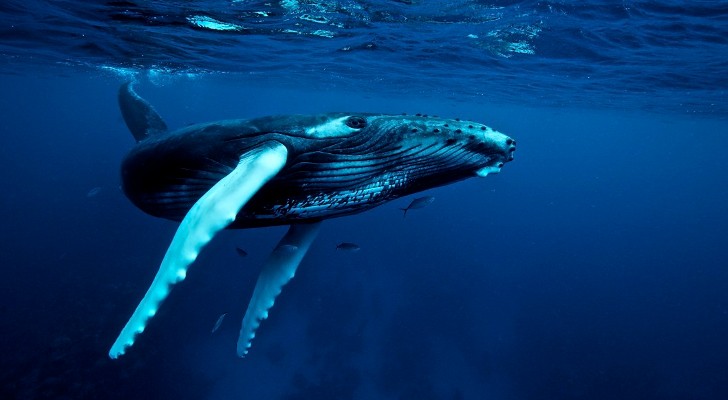
Please note for your happiness: “The latest – and single biggest – sign of revival [in Howe Sound] came when a humpback whale travelled up the fjord, breaching along the way” (Globe and Mail).
Humpback whale found in British Columbia
I just had to make sure everyone knew the part about the whale; way too cute! Thanks dudes, be set for a new post coming soon,
The risks and benefits of chemical technology and other products continue to grow as we discover more about them. Aspartame is one of the most controversial chemical additives found in our food today. The continuous struggle between manufacturers of this chemical additive and the scientists studying its effects has been ongoing for years since the additive was first introduced. Aspartame is comprised primarily of two chemically combined amino acids, L-aspartic acid and L-phenylalanine. Although amino acids usually occur naturally in food products, they do not in aspartame itself and must be artificially manufactured. All amino acids have what is known as a carboxyl group, comprised of one carbon and two oxygen atoms, as well as an amino group, comprised of a nitrogen and two hydrogens. The two groups are bonded through a carbon atom and a hydrogen atom which was given away by the carboxyl group, causing it to become negatively charge and attracted towards the other positively charged groups. When a peptide bond (the bond formed between amino acids) is introduced to too much heat, it’s proteins are broken down into their constituent amino acids, letting them go free. This is why aspartame is not recommended for use during baking as it cannot withstand the high temperatures.
Aspartame’s use is seen in bringing down caloric numbers in soft drinks and other processed foods by acting as a sugar substitute. Because it is around 200 sweeter than regular sugar, less of it is required to acquire the level of sweetness desired, which in turn brings down the number of calories being consumed. But does its few positive effects justify its usage, when the negative effects of aspartame are just as numerous, if not more important? In looking once again at the amino acids, L-phenylalanine in particular, we can see it’s harm to people with what is known as phenylketonuria. For people with this condition, aspartame is highly toxic as they cannot properly process the amino acid phenylalanine. While aspartame has been said to cause other health problems such as:
cancer
diabetes
birth defects
seizures
headaches
lupus
multiple sclerosis
It has still been approved by numerous health-related organizations including the Food and Drug Administration (FDA), the United Nations Food & Agriculture Organization as well as the World Health Organization. It is also worth noting that:
In 2013, the European Food Safety Authority (EFSA) concluded a review of more than 600 datasets from aspartame studies. The group concluded there was no reason to remove aspartame from the market. (The Truth About Aspartame, para. 3)
In an article published by Healthline they discuss the ban on Sweet’n Low in the United States due the research indicating its cancer-causing properties. They speak of how “lab tests showed that massive doses of [saccharin] caused cancer and other disorders in laboratory animals” (para. 6). If we know that this sugar substitute similar to aspartame is cancer-causing, then why are we trusting the use of aspartame, which is still being researched today? As I do frequently get headaches chewing gum with aspartame, I do believe that when possible, aspartame should be avoided.
So what do you think? Is it fair to state that aspartame isn’t dangerous to our health, without adequate enough research? Do you think it’s fair to assume that since we used other sugar substitutes without knowing their full effects that we could be doing the same with aspartame?
I'll be posting soon about Unit 2 so get ready peeps!
C